Abuja forum discusses Nigerian National Petroleum Company’s role in the country’s energy transition
Representatives from Nigeria’s federal government, NNPC, civil society and the policy community met on 8 October, at a forum organised by NRGI, CEFD, ISDRC and CPEEL to examine where the company can contribute to the energy transition and the conditions it would need to do so effectively
The Nigerian National Petroleum Company Limited (NNPC) is one of the most consequential actors in Nigeria’s energy sector. Its investment and commercial decisions influence the development of the country’s petroleum and gas infrastructure and its contribution to initiatives such as the federal government’s Decade of Gas, a plan to expand the production and use of natural gas in Nigeria by 2030.
As Nigeria seeks to expand energy access, support industrial development and advance its climate objectives, what role could NNPC play in the country’s energy transition?
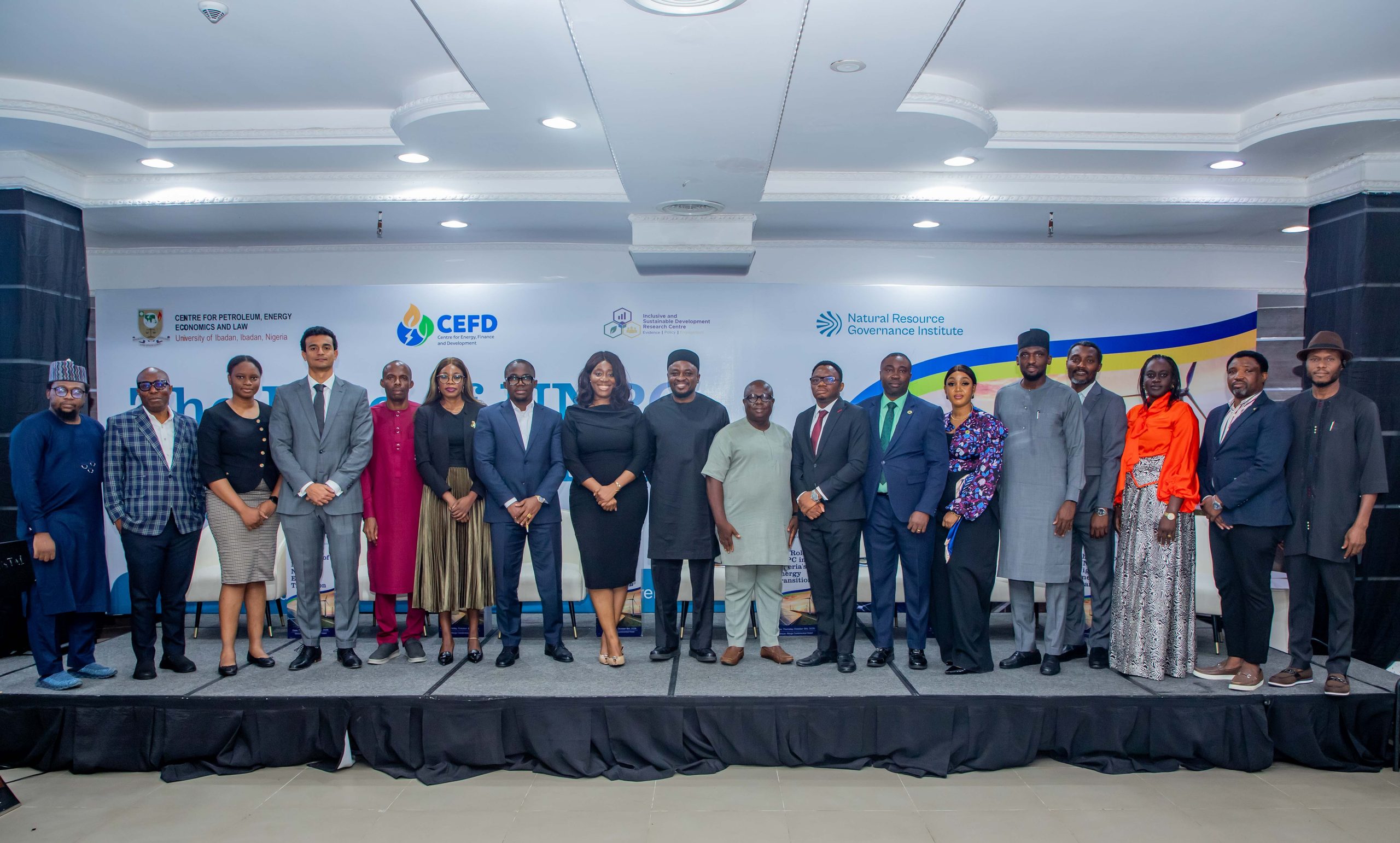
Representatives of the federal government, NNPC, civil society and the policy community met in Abuja on Thursday, 8 October, to examine this question. The event, “The Role of NNPC in Nigeria’s Energy Transition”, was organised by the Natural Resource Governance Institute (NRGI), the Centre for Energy, Finance and Development (CEFD), the Inclusive and Sustainable Development Research Centre (ISDRC) and the Centre for Petroleum, Energy Economics and Law (CPEEL) at the University of Ibadan and was streamed online.
“National oil companies are responding to the energy transition in different ways, shaped by their long-term strategies and domestic political realities,” says Dr Oluwasola Omoju, Research Consultant at CPEEL and ISDRC. “In an economy like Nigeria’s, everything is connected. A shift in NNPC’s investment choices ripples through public revenue, exports, jobs and other sectors, and our modelling is designed to capture those links. NNPC can play an important role in the energy transition, but the economic implications will depend on the strategy it adopts. Decision-makers need to understand what each option would mean for the wider economy.”
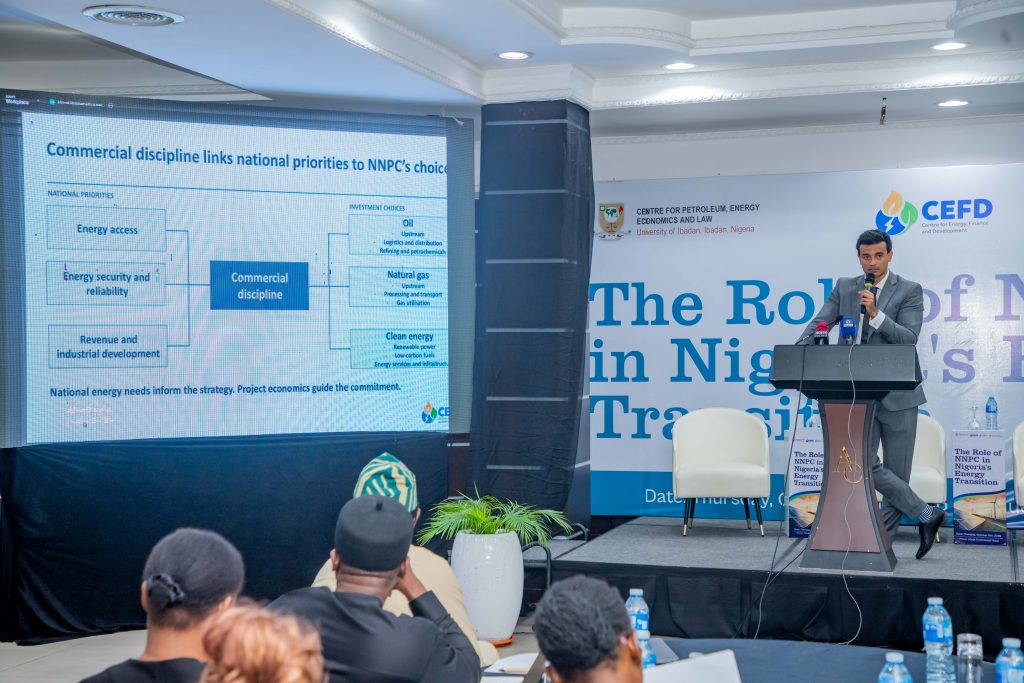
Dr Omoju and Dr Nicolas Lippolis, Founder and Executive Director of CEFD, presented emerging findings from a new policy study on where NNPC has the skills and a sound business case to contribute to Nigeria’s energy transition, and on the conditions the company would need to play these roles well, such as a clear mandate, sound governance and accountability.
“The 2021 Petroleum Industry Act turned NNPC into a commercial company with greater autonomy,” says Dr Lippolis. “That commercial orientation can help NNPC play a more proactive role in Nigeria’s energy transition, provided it is matched by greater clarity about the commercial criteria guiding investments across oil, gas and renewables, and by strategic planning that explicitly accounts for changing global and domestic demand for hydrocarbons.”
Ms Tengi George-Ikoli, Nigeria Country Manager at NRGI, presented on strategic choices open to NOCs as they explore a transformation pathway, sharing insights from NRGI’s report ‘NOC Transformation: Strategic Choices for an Uncertain Future’. NRGI shared insights from its recent study on ‘Energy transition narratives: The Role of NNPC in the Energy Transition’.
Defining the remit
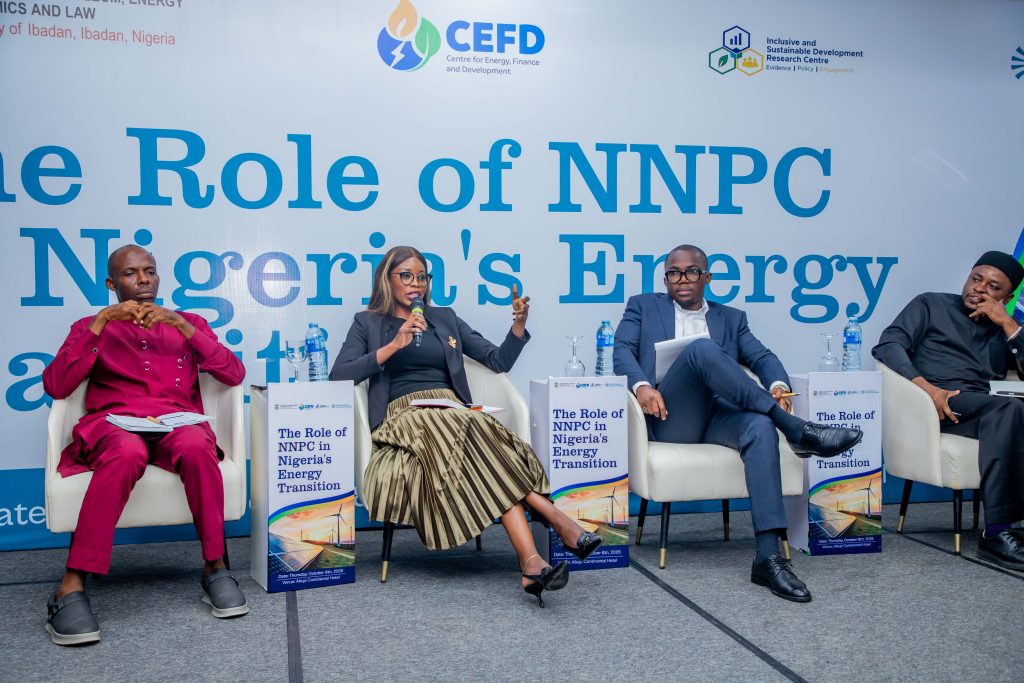
A policy panel moderated by Ms George-Ikoli addressed potential strategic choices to guide NNPC’s transformation pathway, including exploring new and complementary industries such as the power sector, clean energy investment and new low-carbon industries.
“Nigeria’s Energy Transition Plan, which sets a path to net-zero emissions by 2060, gives NNPC a benchmark,” says Ms George-Ikoli. “What we need now is a clear, durable mandate from the state, setting out what the company is expected to deliver, by when, and how progress will be measured.”
Panellists also examined the boundaries of the company’s role, the responsibilities of other public institutions and the private sector, how much of its oil and gas revenue NNPC should keep to reinvest and how much should go to the federal budget, and how new ventures should be financed, governed and held to account so that they make business sense and benefit Nigeria’s wider development.
The discussion also drew on the experience of Ghana. The country began producing oil commercially only in 2010, decades after Nigeria, and its national oil company, the Ghana National Petroleum Corporation (GNPC), is now seeking to run oil fields itself, rather than only holding stakes in projects led by other companies. In August, GNPC and NRGI brought together government, civil society and industry for a national dialogue on the company’s mandate and performance in the context of the energy transition.
The organisers expect the Abuja forum to support continued dialogue among policymakers, NNPC and other stakeholders on how the company can contribute to Nigeria’s energy transition and wider economic transformation.