NNPC May Lose Billions If It Keeps Investing Only In Oil
Transcription:
00:01
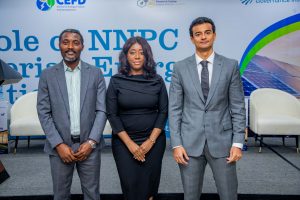
This is a high-level dialogue on the role of the NNPC in Nigeria’s energy transition.
00:08
The Natural Resource Governance Institute and its partners have gathered policymakers, industry leaders and academics to examine a critical question:
00:18
What is the roadmap for the Nigerian National Petroleum Company Limited in an unpredictable energy landscape?
00:25
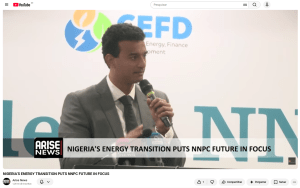
Nicolas Lippolis, Executive Director of CEFD: “It is definitely a very exciting time to be in Nigeria, given the recent track record of reforms, first of all, the Petroleum Industry Act (PIA), subsidy removals, the coming online of the Dangote refinery, and many other reforms taking place in Nigeria at the moment that show that positive change is possible. But at the same time, we recognise that many challenges remain.”
00:49
The country manager of the institute warns that the state-owned oil company needs to invest in other energy sources to safeguard its investments to date.
00:52
Tengi George-Ikoli, NRGI’s Country Manager for Nigeria: “From this slide and our analysis, it shows that about $400 million of planned NOC upstream spending between 2022–2023 and 2032 may fail to break even under a pledges-aligned demand scenario. The pledges made by different countries mean that these investments could potentially be at risk, increasing the importance of this conversation and the need to assess how Nigeria will respond to these risks.”
01:29
The policy engagement is focusing on key areas, including assessing the operational capacity and financial justification for
01:36
the NNPC to invest in low-carbon pathways. The engagement also includes identifying the structural and
01:43
governance reforms needed for the NNPC to function as a commercial entity.
01:50
The institute presents what it regards as a solution for the oil company to thrive in the complexities of the global oil and gas industry.
Tengi George-Ikoli, NRGI’s Country Manager for Nigeria: “Its objectives should also align with national objectives to protect public revenues, enhance energy security, support industrial growth, reduce emissions, and contribute to energy and economic diversification. We are also looking at a just transition, justice and inclusivity, and how to navigate these different considerations.”
02:27
The organisers expect the Abuja forum to support continued dialogue among policymakers, NNPC management and other stakeholders on the company’s role in Nigeria’s energy transition.