
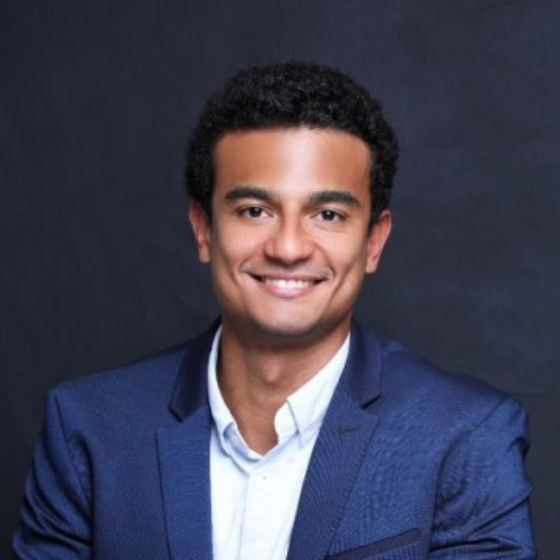
Political scientist and economist specializing in industrial policy, international finance, and the energy transition in Africa and Latin America. Former Postdoctoral Researcher at Columbia University’s Center on Global Energy Policy and Climate School. Holds a BA, MSc, and PhD from the University of Oxford. Has worked as a consultant for the World Bank, African governments, and the Brazilian government, and previously conducted research in emerging markets macroeconomics at Goldman Sachs in London.

Alexander Csanadi is a Junior Research Scientist at NYU Africa House where he conducts research on agriculture systems in rural Ghana, with an emphasis on climate resilience and poverty reduction. Previously, he was a Research Analyst in the Africa Program at the Carnegie Endowment for International Peace where he worked at the intersection of foreign policy and economic development as it relates to Africa. At Carnegie, his work focused on the energy transition, especially novel mechanisms of international climate finance and the potential for “critical” minerals to spur economic transformation. He holds an MA in Economics from NYU and BAs in Economics and International Relations from American University.
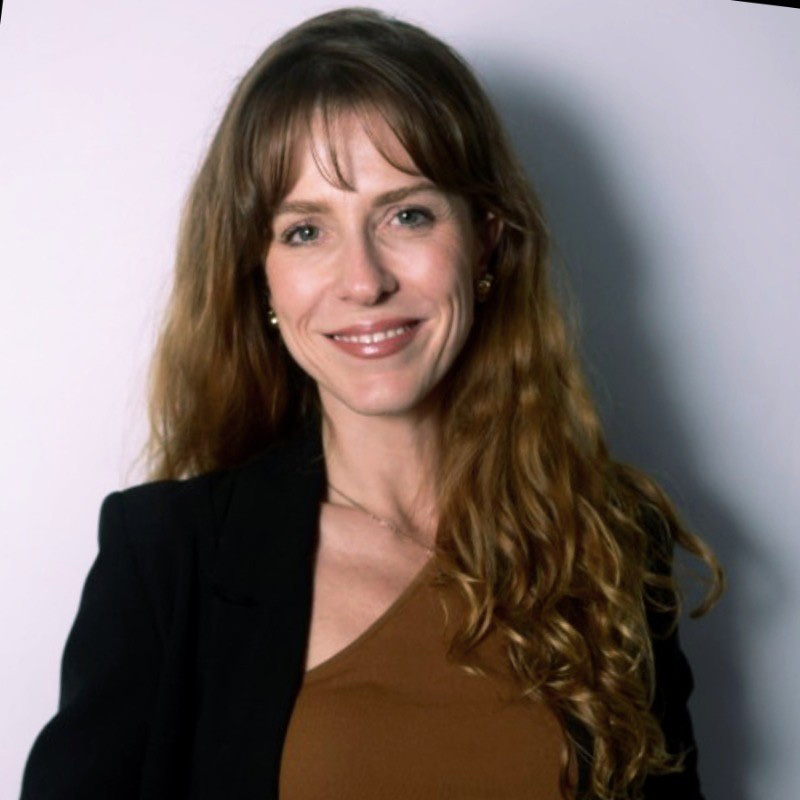
Aline Scherer is a journalist specialising in business, innovation and sustainability reporting, as well as strategic communications for ESG and climate action. She holds a degree in Social Communication from the Pontifical Catholic University of Rio Grande do Sul (PUCRS). She worked as a staff reporter for Exame magazine for five years and, over the past seven years, has contributed as a freelance journalist to publications including The Guardian, Valor Económico, and CNN Brasil, among others. She has also served as a strategic communications consultant on projects for the United Nations Development Programme (UNDP) and the Deutsche Gesellschaft für Internationale Zusammenarbeit (GIZ). At CEFD, she also hosts the Geoeconomics of Transition podcast.
Arthur Facini is an international relations specialist and political scientist specialising in international climate policy and climate obstruction. He is currently pursuing a Master’s degree at the Institute of Social and Political Studies (IESP-UERJ) and holds a Bachelor’s degree in International Relations from the State University of Rio de Janeiro (UERJ). He is a member of the Interdisciplinary Observatory on Climate Change (OIMC) and the World Politics Analysis Laboratory (Labmundo). He has contributed to international research projects in collaboration with institutions including Brown University, Universidad Nacional de San Martín and De Montfort University, and has experience in political risk consultancy within the private sector.
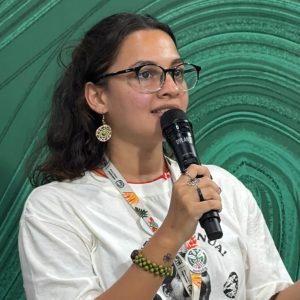
Mariana Malheiros is a researcher and communication professional specialising in the intersection of science, territory and social development in the Amazon. She is an undergraduate student in Environmental Sciences at the Federal University of Western Pará (UFOPA) and a Fellow of the Stanford LC Talent Network. She is a member of the interdisciplinary Gingar Kwasáwa Research Group (CNPq/UFOPA), where she is conducting research on hydropower plants operating without environmental operating licences in the Lower Amazon region. She works in institutional communications and content production, and serves as a consultant on socio-productive initiatives, supporting the development and mobilisation of socio-environmental and community-based projects.

Ricardo Lopes Kotz is a PhD candidate in Public and International Affairs at the City University of Hong Kong. He holds two master’s degrees: one in Chinese Politics (LL.M.) from Renmin University of China, and another in International Relations from the Federal University of Santa Catarina (Brazil). Ricardo previously worked for four years as a junior researcher at a think tank (CEIRI) and has published on topics including technology, innovation, energy, and China’s relations with Latin America.