Countries present new targets at COP30 in Belém
Understanding NDCs: climate targets to curb global warming
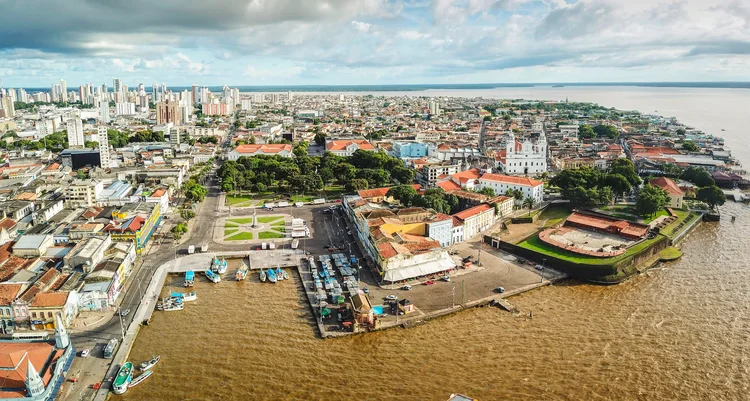
NDCs are climate targets to curb global warming (Getty Images)
Known as Nationally Determined Contributions (NDCs), these climate targets form the foundation of the Paris Agreement, which seeks to limit the rise in global temperature to 1.5°C above pre-industrial levels.
Countries outline their planned actions and monitor the implementation of these targets. A fund also exists to support developing nations. Since the agreement was signed in 2015, NDCs are updated every five years, becoming progressively more ambitious.
For COP30, the current round of contributions is referred to as NDCs 3.0. The new proposals submitted aim to scale up the use of renewable energy, reduce reliance on fossil fuels, and encourage reforestation and zero deforestation.
‘The first NDCs were more generic, relating to entire sectors. Now they are more concrete and clearer. An important and, in some ways, frustrating thing about NDCs 3.0 is that there was an expectation for them to be much more ambitious, and they disappointed because they did not deliver what was expected. We are in the third round of NDCs, and we need to start reviewing them to actually achieve Net Zero (net-zero emissions by 2050), which is still a long way off,’ warns Isabela Morbach, director of CCS Brasil.
Released in October, the synthesis report by the UN Framework Convention on Climate Change analysed 64 new NDCs submitted between 2024 and 2025. Together, they account for around one-third of global emissions and project a 17% reduction in emissions by 2035 compared to 2019 levels. Despite these advancements, the UN warns that the effort is still not enough to secure the 1.5°C target.
COP30 Challenges
One of the main challenges of COP30 is securing climate finance. The UN estimates that US$1.3 trillion in investment will be needed to enable mitigation and adaptation actions, especially in developing countries.
‘From there, I believe the priority point is the radical reduction in the use of fossil fuels, with actions spanning various sectors, such as energy and industry. Alongside this, the focus must also be on sustainable land use, with more rational food production and revegetation measures,’ assesses specialist Flávia Reis, a partner in the Environmental practice at FLH Advogados.
Meanwhile, the Global Stocktake—a mechanism that measures collective progress towards the Paris Agreement targets—reinforces the urgency of tripling renewable energy generation, doubling energy efficiency by 2030, and defining the Roadmap for the mission to keep the planet’s temperature rise within 1.5°C.
COP30 in Belém, running until 21 November, promises to be decisive for the planet’s climate future and for defining Brazil’s role as a facilitator of new global ambitions, highlights political scientist and economist Nicolas Lippolis, a researcher at the Center on Global Energy Policy and the Columbia Climate School in New York. He is also the founder and executive director of the Centre for Energy, Finance and Development (CEFD).
‘Firstly, due to its strong tradition of climate diplomacy, which dates back to the founding of the UN framework convention on climate change in Rio de Janeiro in 1992 and has since endured as an indispensable player in climate negotiations. Secondly, because it possesses characteristics that allow the country to engage in dialogue with various relevant actors in climate policy. Not only do we host the world’s largest tropical rainforest, but we are also the largest of the major economies with the highest proportion of renewables in our electricity mix,’ states the expert.