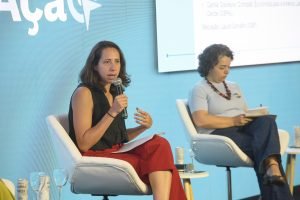
An event at the 1st Transitioning Away from Fossil Fuels Conference, in Santa Marta, Colombia, discussed subnational financing.
Co-organised by the CEFD, the governments of Colombia and the Netherlands, and the Climate Group, the panel brought together experts from Brazil, Ecuador, Canada, Nigeria, and the United States to debate the role of states and provinces in the low-carbon economy.
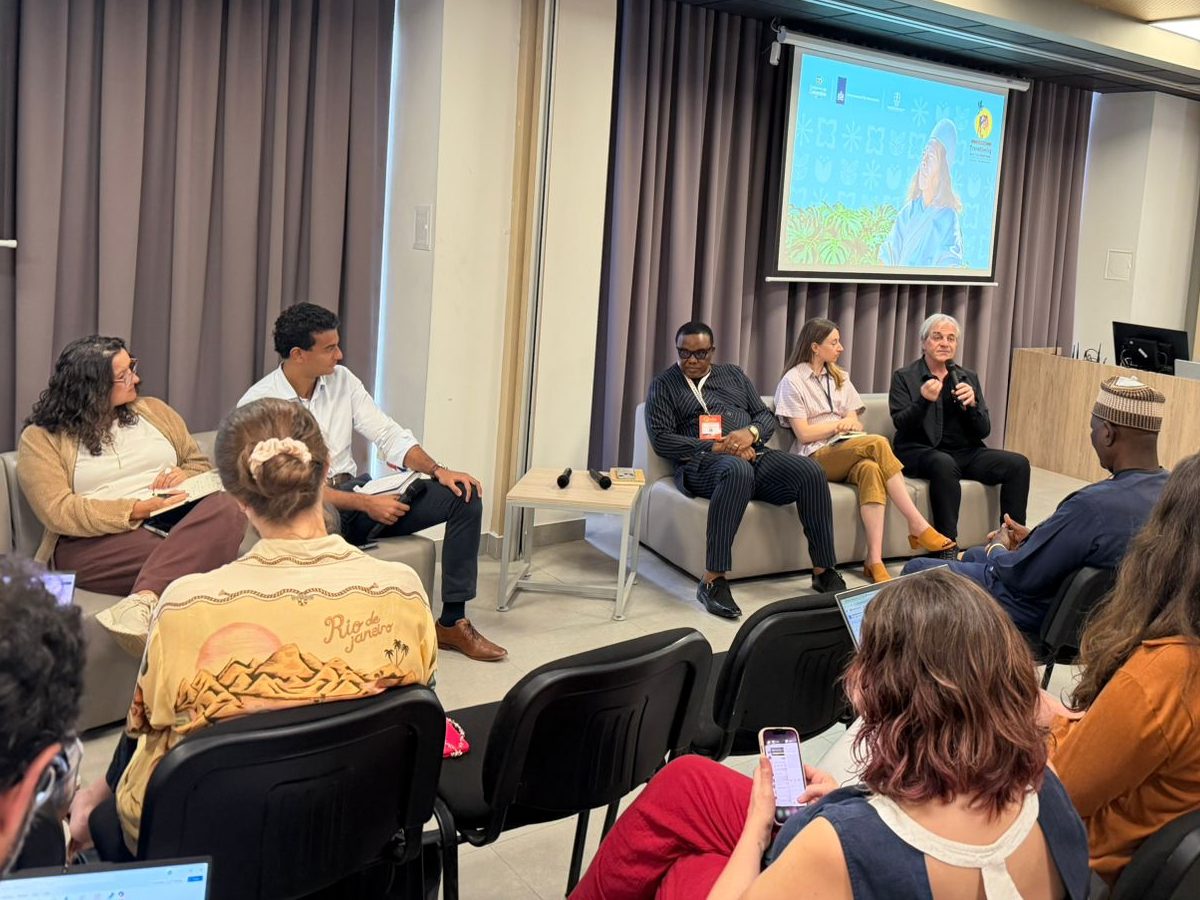
The management of oil and gas revenues by subnational governments was at the heart of the debate during the 1st Transitioning Beyond Fossil Fuels Conference, in Santa Marta, Colombia. In this context, the Centre for Energy, Finance and Development (CEFD) organised the panel ‘Financing the Transition from the Local Level: Fossil Fuel Revenues and Subnational Climate Action’, in partnership with the government of Colombia and the Under2 Coalition — a group of subnational governments committed to climate action, whose secretariat is managed by the non-profit organisation Climate Group. Held on 27 April, the meeting brought together leaders to discuss how to transform fiscal dependence on fossil fuel revenues into a lever for a just transition.
Moderated by Nicolas Lippolis, founder and executive director of the CEFD, the panel articulated diverse yet convergent experiences. From Brazil, Gabriela Vichi, Chief Operating Officer of the Development Bank of the State of Espírito Santo (Bandes), presented the state’s sovereign wealth fund, Funses, as an instrument for the intertemporal management of oil royalties. Aimed at mitigating volatility and preserving value, the fund combines fiscal stabilisation and savings with a development agenda.
According to Vichi, governance involves the State Secretariat of Finance and Banestes (the state’s mixed-capital bank) in asset management, whilst Bandes acts as the financing arm, directing resources towards productive diversification, decarbonisation, and low-carbon projects. Allocation rules, risk management, and transparency are central to ensuring fiscal discipline and strategic coherence.
This articulation between instruments also featured in the speech by Jean Lemire, Quebec’s Climate Envoy, from Canada. He highlighted that the province combines a predominantly clean electricity matrix, based on hydroelectric power, with robust economic instruments, such as the carbon market integrated with California under the Western Climate Initiative. Integration increases scale, reduces costs, and enhances predictability, while simultaneously generating public revenue for reinvestment in climate policies. Lemire also emphasised the role of subnational diplomacy in enabling such arrangements.
From a regulatory perspective, Sarah Izant, Deputy Secretary for Climate Policy at the California Environmental Protection Agency, USA, highlighted the Low Carbon Fuel Standard (LCFS). The programme sets targets for reducing the carbon intensity of fuels and operates through tradable credits, covering various vectors such as biofuels, electricity, and hydrogen. According to Izant, the LCFS creates price signals that incentivise lower-carbon intensity fuels.
She further emphasised the complementarity with the Advanced Clean Cars Programme, which combines emission limits with mandatory sales targets for zero-emission vehicles by 2035. This suite of measures operates alongside a more restrictive regulatory environment for fossil fuels, in which more rigorous environmental requirements have contributed to refinery closures and a decline in production. These shifts create fiscal and economic challenges for municipalities dependent on these activities, reinforcing the need for just transition policies at a local level.
The African experience added a strategic dimension with Magnus Omuoha, President of the Society for Petroleum Administration in Nigeria and Vice-President of the Renewable Energy and Energy Efficiency Associations Alliance. He highlighted the role of natural gas as a transition vector in economies with energy access deficits, allowing for reduced emissions while sustaining the expansion of energy supply. In this view, the transition occurs in stages, with gas playing a structural role in the short and medium term.
Omuoha also mentioned the establishment of a carbon market in Nigeria as part of the strategy to attract investment and create new revenue streams. According to him, pricing instruments can connect domestic policies to international financing flows, provided they are accompanied by regulatory frameworks and institutional capacity.
Juan Cristóbal Lloret, Prefect of the Province of Azuay, Ecuador, shifted the debate towards the international dimension. Rather than treating the subject as ‘financing’, he advocated for compensation, arguing that biodiverse regions in the Global South provide an environmental service that must be remunerated by historically emitting economies. He highlighted proposals such as debt-for-climate swaps and the need for local governments to have direct access to international resources, reducing intermediaries and allowing for faster responses to floods and droughts.
Throughout the panel, a clear diagnosis was consolidated: although they are on the frontline of climate change impacts, subnational governments are also leading some of the most innovative experiences in climate finance. In several cases, oil-producing regions have adopted more proactive stances than their national governments in building pathways beyond fossil fuels. This movement reinforces the importance of understanding, systematising, and connecting these initiatives, thereby broadening international exchange and the dissemination of effective solutions.